HRJS Field Essays · Field Essay 001
It’s Got Electrolytes
When Everybody Is Representin’, Who Is Watching the Garden?
Shadow Literacy & Human Continuity · September 22, 2026An HRJS discipline
We don’t know.
We should go look.
01 / The threshold
Shadow Literacy names the willingness to examine what people, relationships, institutions, and public narratives cannot yet see—or have learned not to see. It begins with disciplined curiosity: neither accusation without evidence nor certainty manufactured to escape discomfort.
Human continuity asks who absorbs the consequence.
Institutional accountability asks where responsibility lives.
Future-facing systems ask what must change once the shadow becomes visible.
Hidden conditions are not presumed motives
These conditions are reasons to investigate structure—not shortcuts to claiming hidden intent.
02 / The published architecture
Shadow Literacy examines what people, relationships, groups, institutions, and systems have difficulty seeing about themselves. It keeps inquiry, evidence, power, consequence, and accountability in the same field—without turning uncertainty into accusation or explanation into absolution.
When Everybody Is Representin’, Who Is Watching the Garden?
Shadow Literacy & Human Continuity · September 22, 2026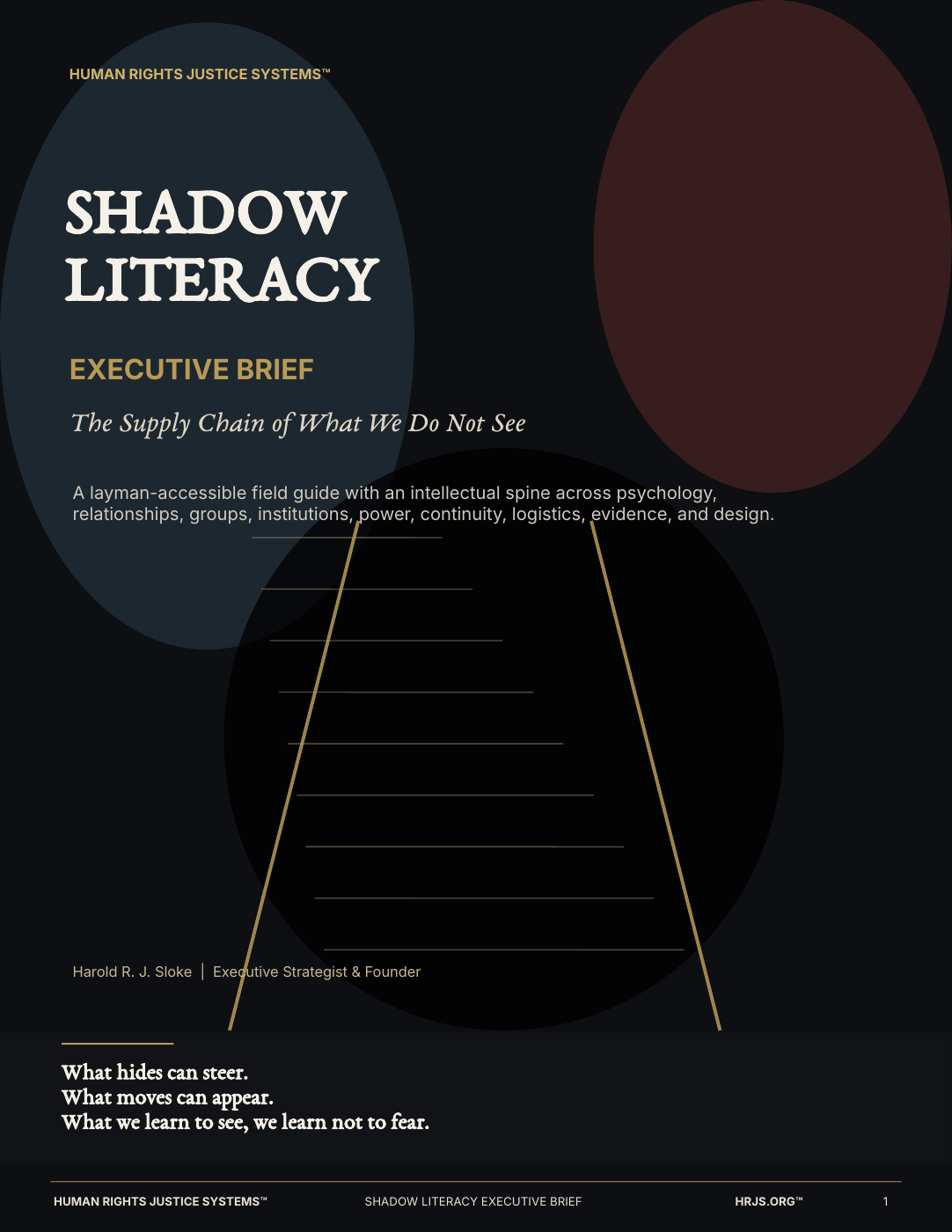
A direct, layman-accessible introduction to the lens: what shadow is and is not, how it moves across scale, why power changes its consequences, and how disciplined inquiry can lead toward better design.
Read the executive brief ↗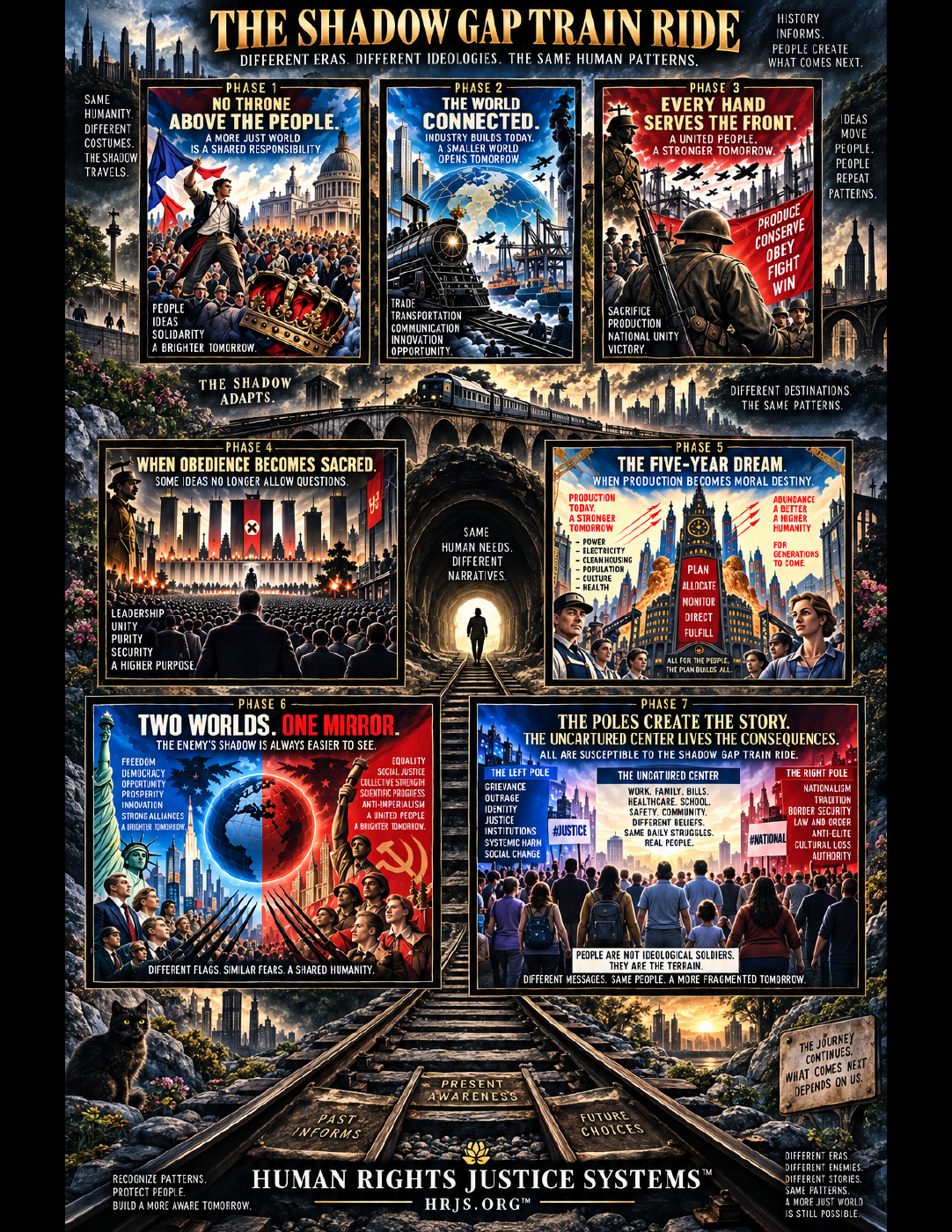
The full intellectual architecture: psychology and projection carried outward through relationships, group identity, organizational shadow, administrative power, fragmented responsibility, historical recurrence, evidence, continuity, and system redesign.
Enter the full work ↗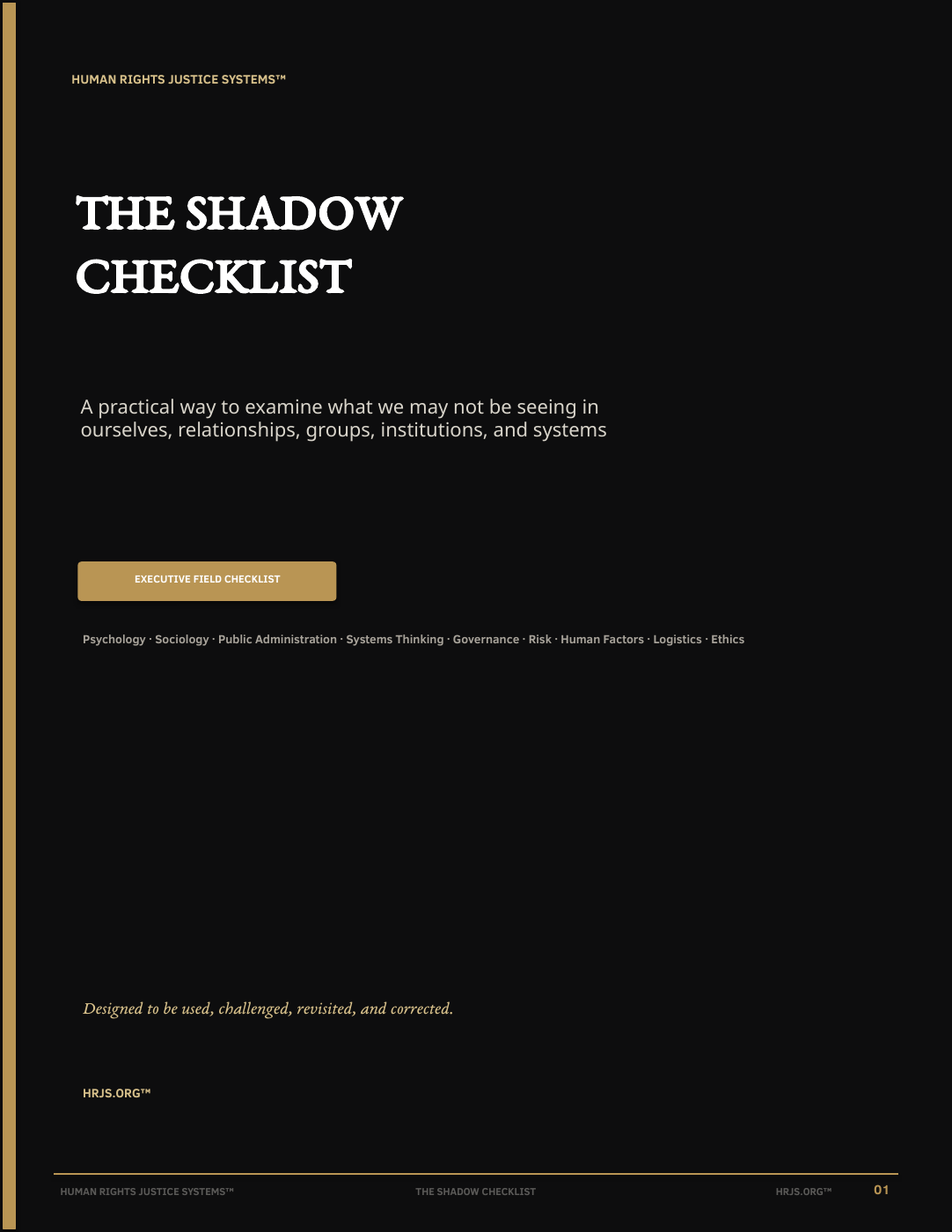
A usable field instrument for examining the self, the space between people, group belonging, institutional process, cross-institutional gaps, power, consequence, and integration. It is designed to slow certainty, test assumptions, and preserve accountability—not diagnose people or manufacture verdicts.
Open the checklist ↗Also available in Next Step(s) →Human continuityTrace where burden accumulates and where continuity breaks.
Institutional accountabilityExamine power, visibility, ownership, incentives, and the ability to correct.
Future-facing systemsCarry what becomes visible into boundaries, repair, redesign, and review.
03 / Visual field notes
These images translate the written architecture into visible questions: what the record shows, what the system hides, and who carries the difference.
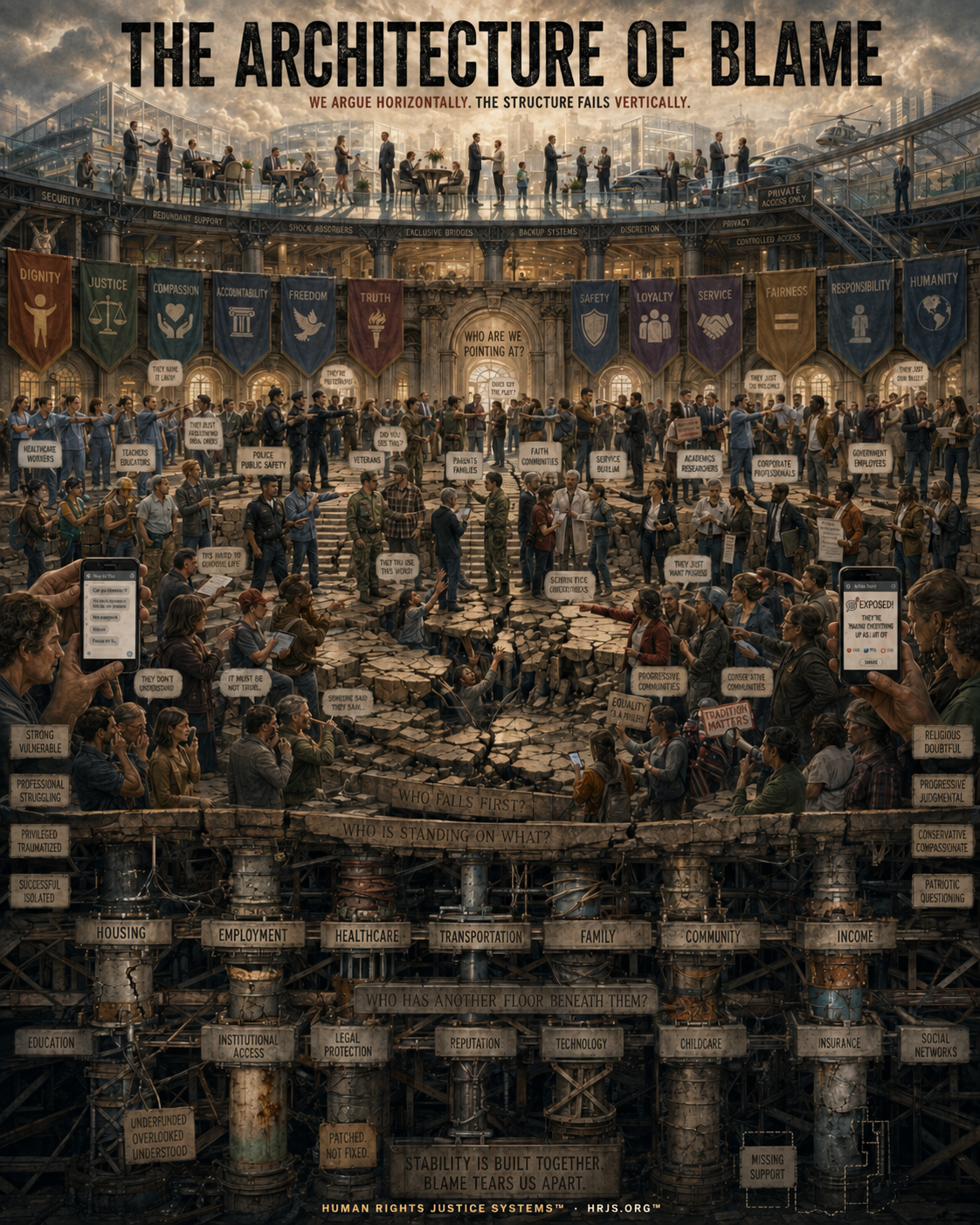
We often argue across the visible surface while the structure beneath us determines who can absorb failure—and who falls first.
View full image ↗
Uncertainty is not a verdict. It is an invitation to trace the systems, handoffs, incentives, and consequences that ordinary visibility leaves out.
View full image ↗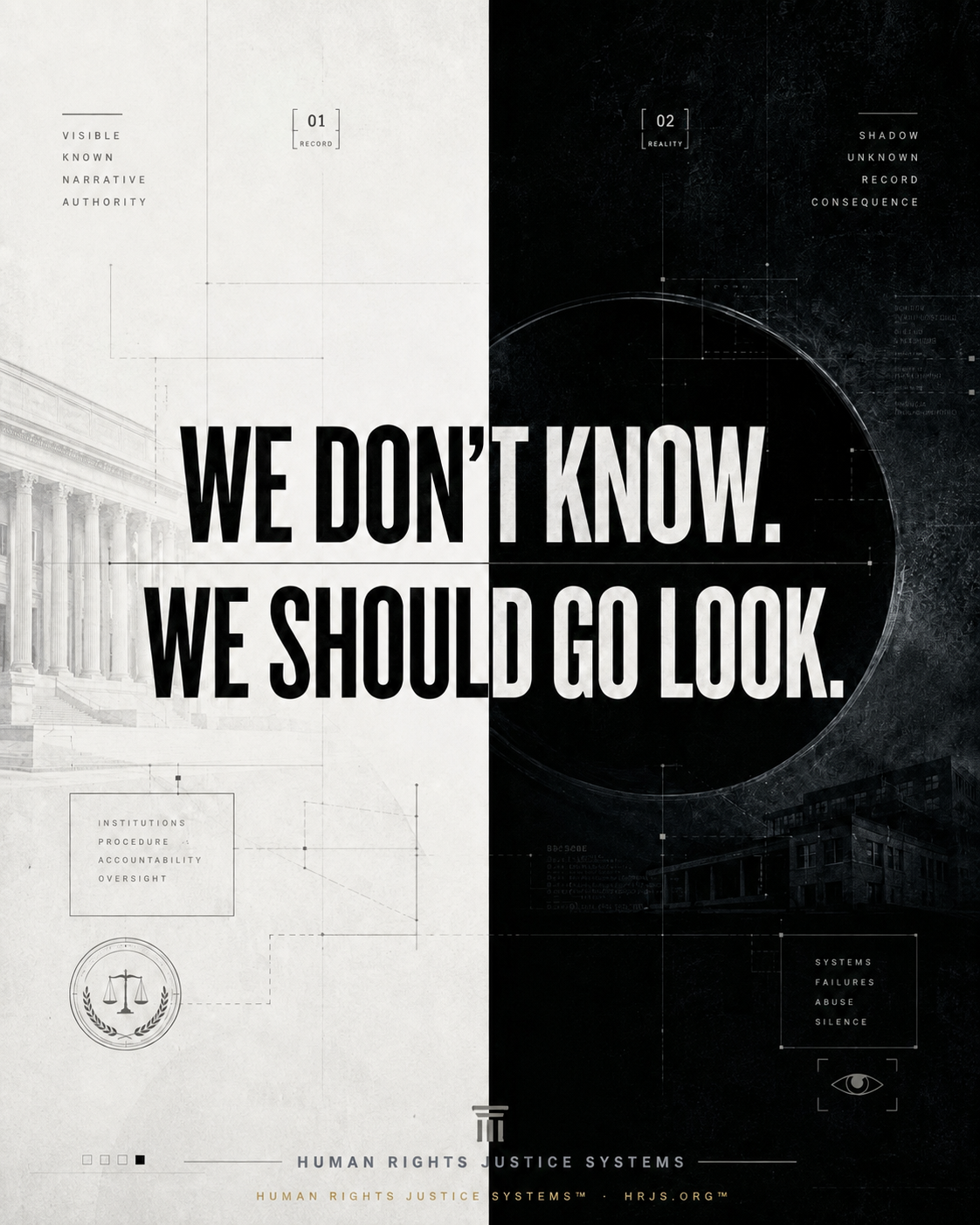
The formal record and the lived reality may occupy the same system without telling the same story. Responsible inquiry holds both in view.
View full image ↗04 / The Shadow Literacy anthem
Difference does not require dehumanization. Accountability does not require becoming the harm we oppose.
The song follows shadow from the private mirror into relationships, groups, movements, and institutions—then brings responsibility all the way back to the self. No tribe, profession, faith, ideology, or authority receives a spotless side of the mirror. The invitation is universal: examine what we inherit, what we repeat, and what our justified pain can become when it is left unexamined.
Its structure carries that movement emotionally. Reflection gathers into a communal refrain; the pressure intensifies without abandoning the song’s human center; and the circular close returns scrutiny inward. The result is confrontational without being annihilating—a call to preserve boundaries, truth, and difference while refusing to surrender love.
The posture