01 / Begin hereExecutive Brief
Enter through the central argument, governing questions, and executive implications in a concise 10-page form.
Open the Executive BriefThe HRJS Long-Form Column
Liminal analysis across human experience, institutional power, and consequential systems.
01 / The publication column
Threshold Essays examines what becomes visible when a subject is read from more than one institutional, operational, human, and moral position at once. Each work is an invitation to stand where established categories meet, overlap, and sometimes fail to carry the whole consequence.
Threshold Perspective · Publication 01
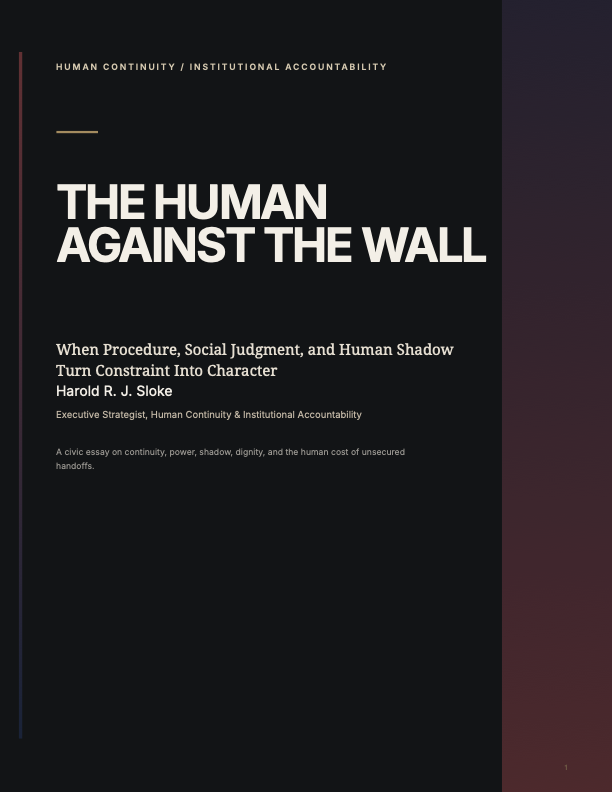
When Procedure, Social Judgment, and Human Shadow Turn Constraint Into Character
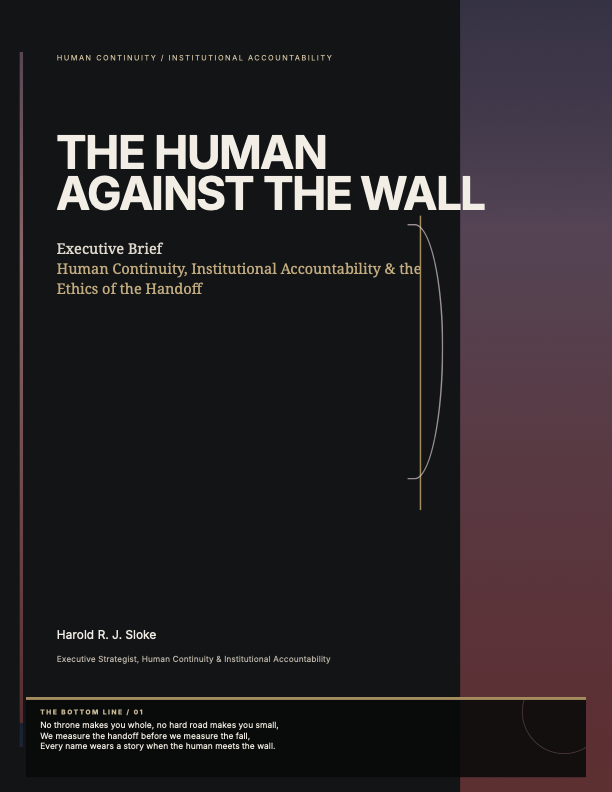
The Executive Brief is the concentrated entry point. The full work develops the same inquiry across continuity, procedure, power, social judgment, institutional handoffs, and the human consequences that accumulate before a person reaches the wall.
Enter through the central argument, governing questions, and executive implications in a concise 10-page form.
Open the Executive BriefContinue into the complete 117-page civic inquiry, where the subject is developed across its human, institutional, operational, and moral dimensions.
Continue into the Full WorkThreshold Perspective · Publication 02
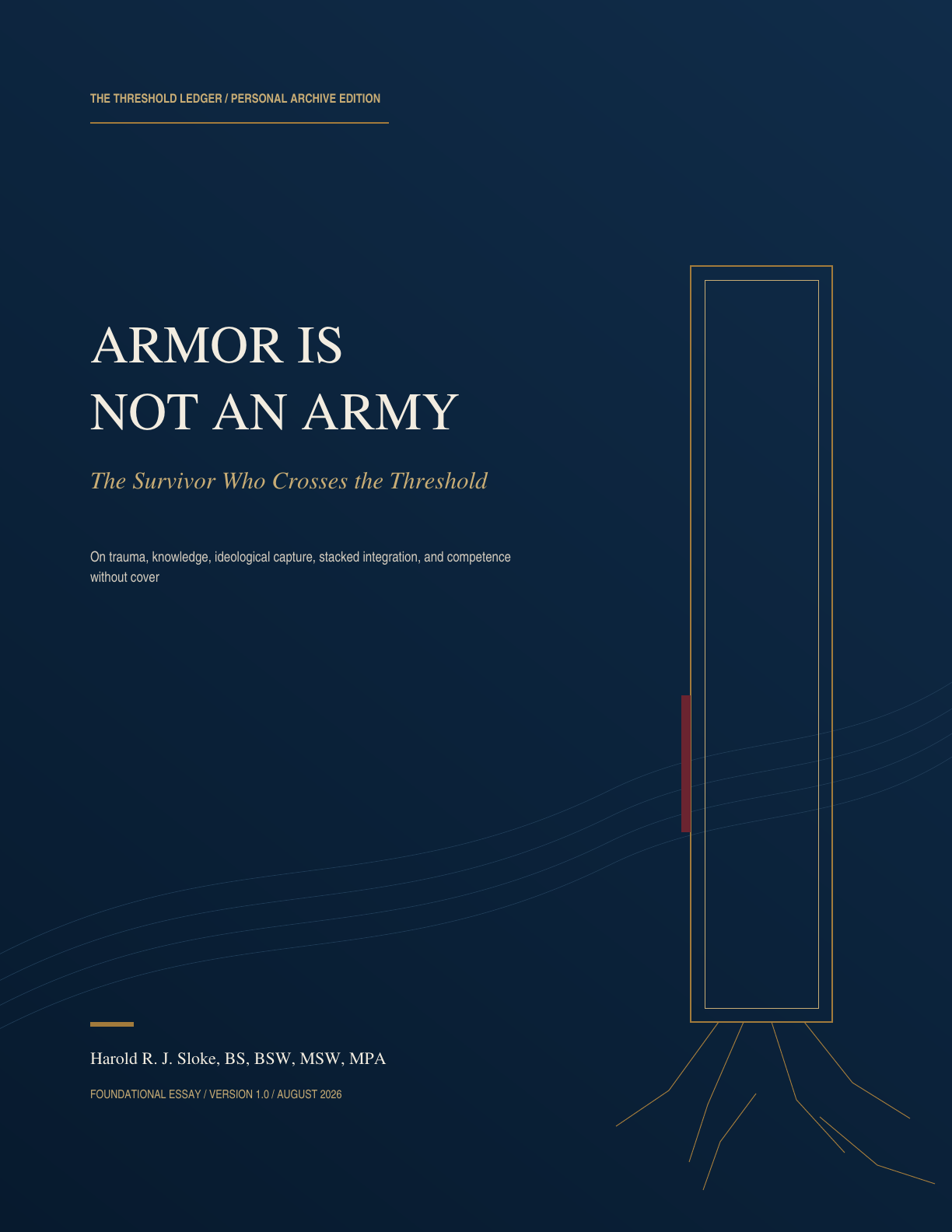
The Survivor Who Crosses the Threshold
The world sees the armor and assumes an army stands behind it.
A foundational inquiry into the difference between surviving visibly and being structurally protected. The work follows the person whose competence, discipline, and strength are mistaken for durable cover—and asks what must be built when armor has had to substitute for witnesses, reciprocity, institutional courage, and belonging.
How adversity can produce visible strength without stable protection.
Why capability can mask isolation, exposure, and the absence of reciprocal support.
How honest self-examination can turn rupture into grounded responsibility.
The movement toward durable belonging, fair process, and future-facing stewardship.
Threshold Perspective · Publication 03
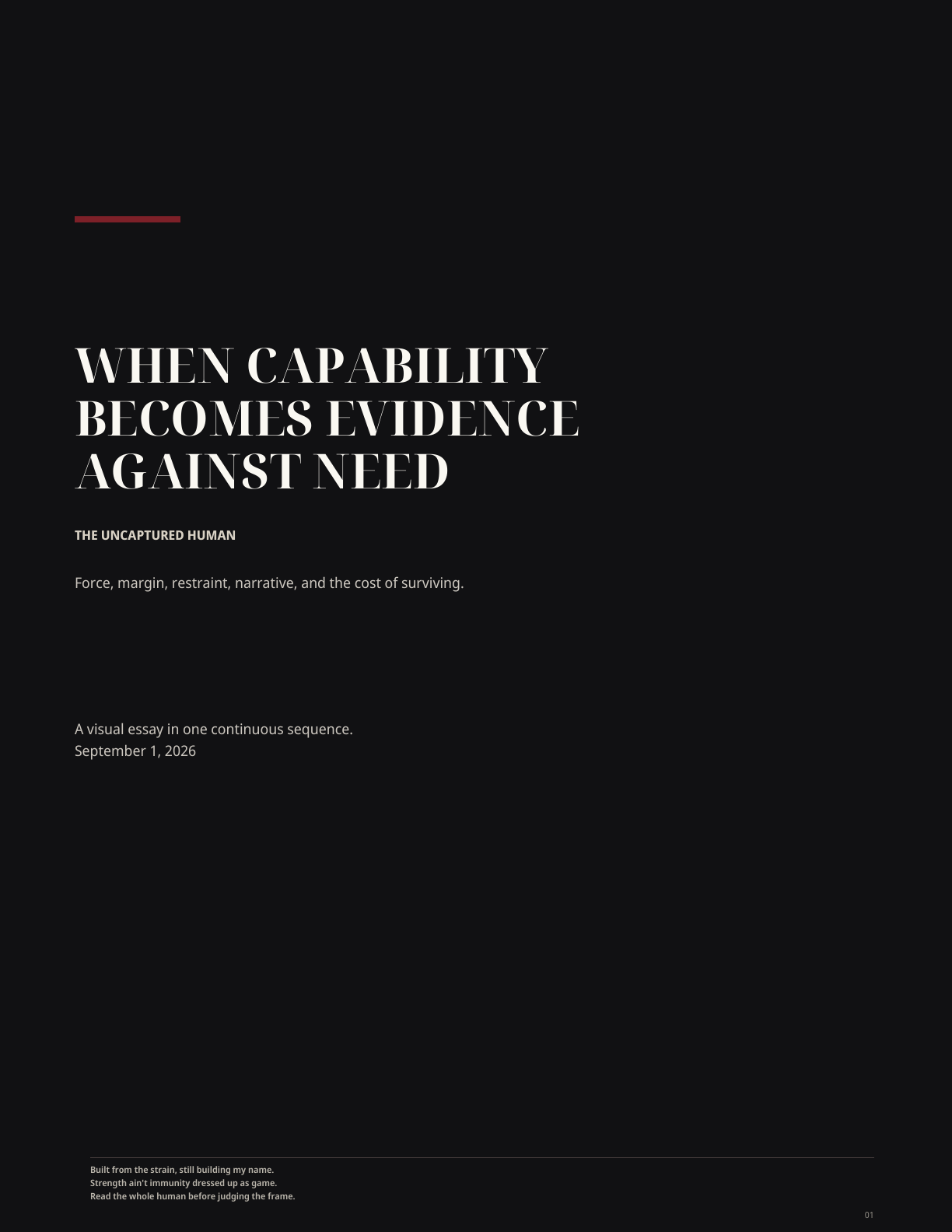
Force, margin, restraint, narrative, and the cost of surviving.
A visual inquiry into a recurring human and institutional error: treating visible strength, intelligence, restraint, or self-sufficiency as proof that a person requires less care, protection, or support. The work asks readers to see beyond the capability on display and account for the full human condition carrying it.
Visible strength can coexist with depleted emotional, financial, social, or institutional reserves.
When force is available, choosing the response that protects tomorrow is not passivity.
No single trait, reputation, failure, or adaptation can carry the truth of a whole human being.
Read the whole human before judging the frame.
Threshold Perspective · Publication 04
A first-person executive record of survival, command, institutional memory, and reclamation.
The system was not stable. Someone was stabilizing it.
A first-person record of a life repeatedly asked to stabilize systems that later forgot the labor holding them together. Across foster care, policy, frontline operations, medical crisis, fatherhood, identity, ideological transformation, institutional conflict, and founder formation, the work distinguishes visibility from authorship—and survival from command.
Its higher claim is not that every witness must remember correctly. It is that a disciplined record can reclaim authorship, assign responsibility with precision, and turn lived consequence into institutions that remember human beings before catastrophe forces recognition.
05Executive movements
12Analytical crossings
40Containment declarations
05 / Read on site
Foundational perspective
An executive perspective on institutional power, human continuity, procedural access, and accountability proportionate to authority.
Read the on-site perspectiveThreshold subsection · 01
Two different kinds of disappearance. Two different systems of consequence. One human need to love, grieve, remember, and remain connected.
Memorial record · Family chronology
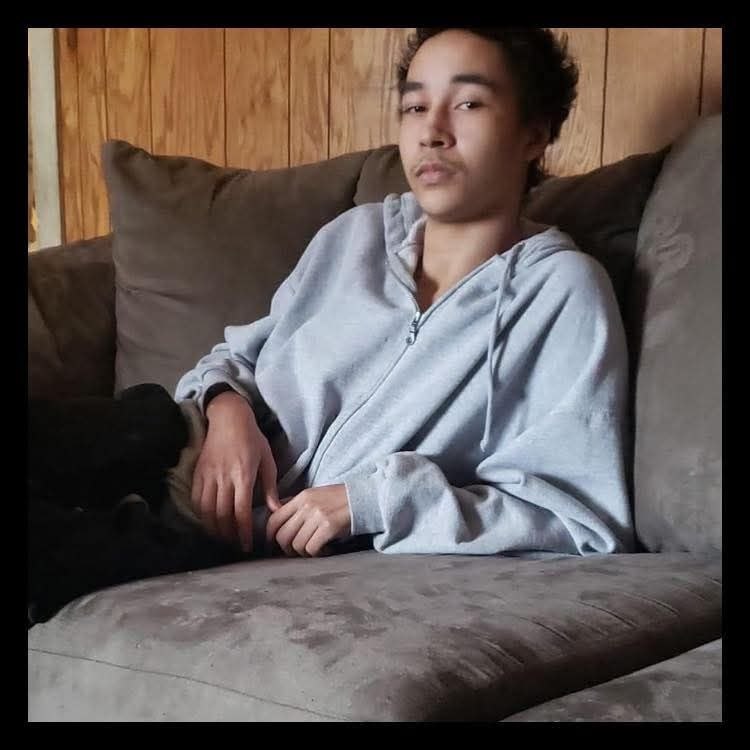
#Justice4Kalob was created by my mother as she tried to bring sustained public attention to what happened to my brother. She has continued using it through social media while grieving and seeking accountability. Her efforts have had limited reach. I include it here so that the record, the person, and the family behind the record are not reduced to a passing headline.
I also reached out to Black Lives Matter and other organizations associated with police-brutality advocacy, accountability, and related public-interest work. I did not receive a response. I do not know why, and I will not assign a motive where I do not have evidence. That absence of response is simply part of the chronology.
A brother is lost before reconciliation can become ordinary life. Death closes the future completely, while the surviving family carries the unanswered record, the unfinished relationship, and the obligation to insist that an imperfect life still possessed irreducible human worth.
A child remains alive but inaccessible. There is no obituary, no socially settled language for the loss, and no final moment that permits grief to conclude. Hope remains present, but so do birthdays, distance, unanswered questions, and the ordinary fatherhood that separation interrupted.
The son · A living separation
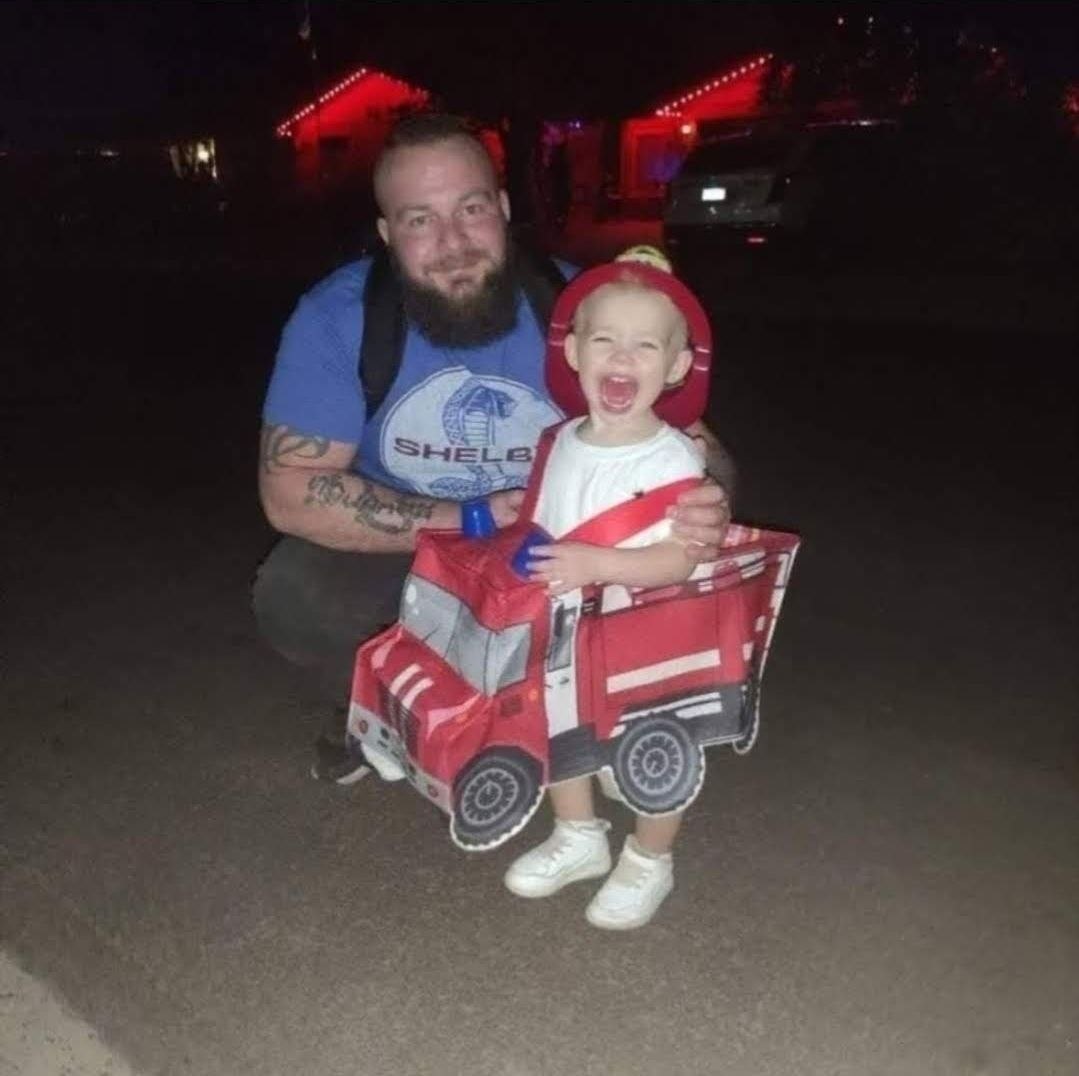
I am not publishing my son’s name here because he is a child and his privacy matters more than making this account easier to identify.
The last time I physically saw my son was October 31, 2023. The following week, when I expected to exercise my next visit, I learned that his mother had taken him across state lines and across the country. At the time, I believed I had substantial documentation supporting that my son had been a resident of Arizona and that Arizona was the appropriate jurisdiction for the custody matter. I presented that documentation through the legal process.
My understanding was that one piece of documentation presented on her side concerned air travel. I did not believe that single item resolved the broader residency and jurisdictional evidence I had submitted. From my perspective and based on the proceedings I participated in, I was not aware of any sanction or consequence being imposed in connection with the interstate move.
My last physical, in-person contact with my son.
A court order was issued. After the move, I was periodically permitted contact through Skype.
Our last actual Skype session. This was separate from the Christmas session that was later planned.
I expected to watch him open the Christmas gifts I had sent. The planned Skype session did not occur. Instead, I received an email stating that I would have to fight for every right involving contact with him. Christmas became the point at which even the limited contact I still had effectively disappeared. It was one of the most painful Christmases of my life.
Adult-content material associated with me was sent to my employer. I subsequently lost my employment.
The loss of employment destabilized the remaining infrastructure of my life very quickly. With very little financial margin and little practical time to recover after losing my income, I fell behind on housing and was ultimately evicted. Two vehicles were subsequently repossessed.
Since that contact ended, I have not spoken with him, seen him in person, or received photographs of him, despite continued outreach and continued efforts to restore lawful contact. I continue to pursue lawful avenues to restore contact with my son. I include this history here not to turn him into evidence in an adult conflict, but because prolonged family separation has consequences that are often invisible to people looking at a court file from the outside.
These are not the same event and they should not be collapsed into one another. One involves death. The other involves prolonged separation from a living child. What connects them for me is the human experience of disappearance, grief, institutional process, and the struggle to remain connected to someone I love.
The anthem as threshold analysis
The song places bereavement and living absence beside one another without pretending they are the same event.
Its architecture moves between two voices: the brother whose death made reconciliation impossible, and the son whose continued life makes separation permanently unresolved. One grief is given a grave and public permission to mourn. The other remains suspended between love and uncertainty, with no accepted ritual for the years still passing out of view.
The returning ensemble does not solve either absence. It carries love across both. Strength appears not as emotional invulnerability, but as the decision to keep fatherhood, brotherhood, memory, and moral responsibility alive when restoration is unavailable. Even the references to lost animals and children’s handprints widen the emotional field: every attachment has its own life, and no new bond erases the one that came before it.
Within Threshold Essays, the anthem asks what institutions, courts, police systems, families, and public narratives fail to see when they classify absence only by its legal category. Different causes require different records and remedies. Yet the human consequence can still cross the same threshold: someone remains, carrying a relationship that can no longer proceed as promised.
The complete written work
Grief, authority, family, and the architecture of human continuity.
The monograph begins inside two absences that arrived almost together: Kalob, the brother whose death ended a fragile path toward reunion, and a young son whose life continued beyond his father’s reach. One loss is final. The other remains alive with possibility. The work refuses to collapse that difference even as it names what both do to the person left carrying love without access to the ordinary future he expected.
From that intimate hinge, the inquiry widens into foster care, family courts, parental conflict, mental-health crisis, lethal police encounters, race, class, public narrative, and the asymmetry between institutional closure and human aftermath. It examines Black Lives Matter and Thin Blue Line cultures without granting either a monopoly on truth; it gives police authority its necessary scrutiny while preserving officer humanity, due process, and the evidence of policing done well.
Its hardest audit is inward. The author places his own grief, anger, former ideology, parental perspective, and need to be believed inside the same evidentiary discipline he asks of institutions. The result is neither a plea for sainthood nor a demand for a predetermined villain. It is a serious attempt to keep the child from becoming a trophy, the victim from becoming a symbol, the badge from becoming a halo, and loss from becoming permission to stop looking.
A counterpart threshold perspective
Someone Was Supposed to Show Up
Presence should not become extraordinary enough to feel miraculous.
The essay begins with firefighters arriving for a three-year-old whose birthday guests largely did not. Their kindness is real, but it exposes a harder civic question: what does it say about our human architecture when extraordinary institutional presence must replace the ordinary village that never came?
That image opens into a personal record—from childhood without secure attachment and locked foster-care settings to the last Halloween the author spent with his youngest son, dressed as a firefighter before separation turned an expected next weekend into years of living absence. The piece is candid about loneliness, conditional belonging, personal failure, and scapegoating without converting any of them into immunity from evidence or responsibility.
As a counterpart to The Son and the Brother, this essay changes the angle of inquiry. The earlier work asks what different forms of disappearance do to the person left carrying love. This one asks who absorbs the cost when families, communities, institutions, and spectators normalize absence—and what future the people paying those consequences will eventually build.
The determination is deliberately practical: fewer people falling through, more curiosity before judgment, and one clean move after another toward the living being still within reach. It does not romanticize suffering or promise rescue at scale. It commits to using writing, advocacy, art, fatherhood, evidence, and systems work so that less preventable abandonment exists because the author was here.
The causes are not interchangeable. The grief is not identical. But neither the dead nor the living should disappear simply because a system lacks language for the people left loving them.
Different systems produce different explanations.